PSMA — From Diagnostic and Therapeutic Target to Tumor Biology
Prostate-specific membrane antigen (PSMA) is a transmembrane protein highly expressed in prostate cancer cells. PSMA has become an important molecular target in prostate cancer, with applications including PSMA-PET imaging and PSMA-targeted radioligand therapy.
Our research goes beyond the use of PSMA as a diagnostic marker and investigates its biological functions in cancer progression and the tumor microenvironment.
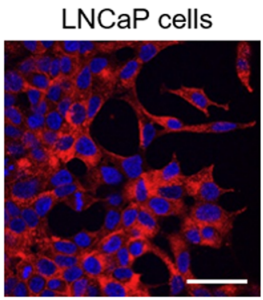
Watanabe et al. The Prostate 2021
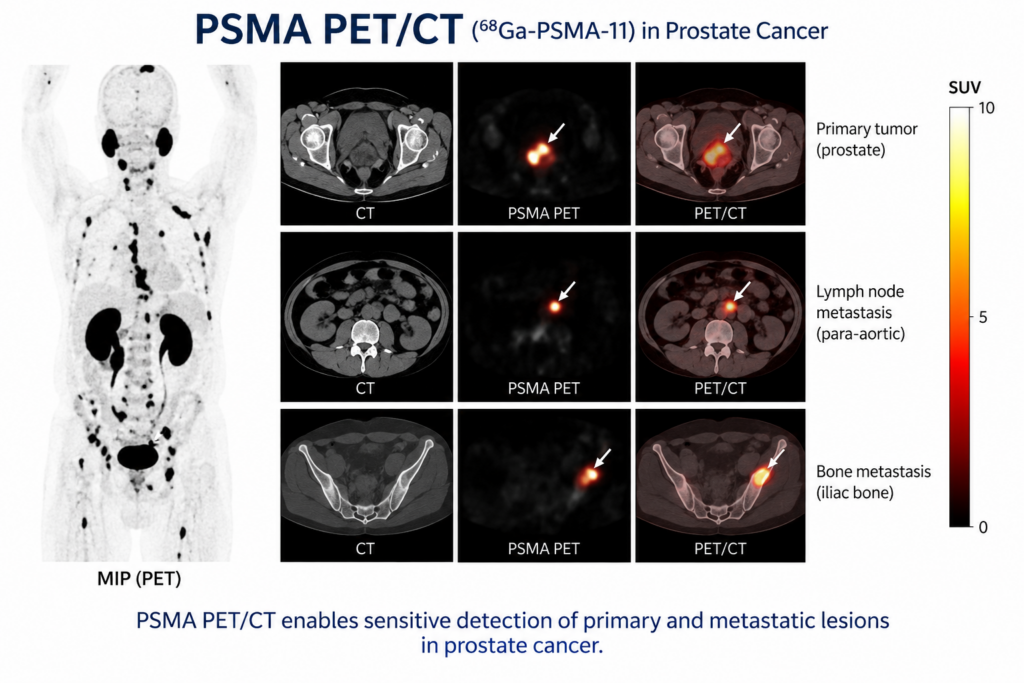
How Does PSMA Affect Tumor Vasculature?
We previously demonstrated that PSMA-positive extracellular vesicles released from prostate cancer cells act on vascular endothelial cells and promote a pro-angiogenic phenotype.
These findings suggest that PSMA is not merely expressed on the surface of prostate cancer cells, but may also contribute to molecular communication between tumor cells and the surrounding vasculature.
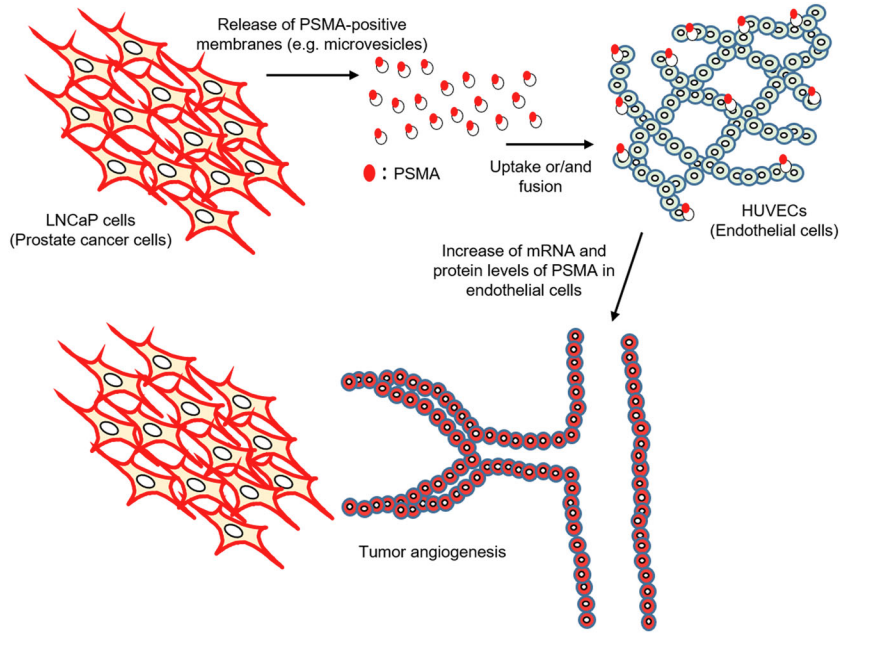
Watanabe et al. The Prostate 2021
From Prostate Cancer to Renal Cell Carcinoma
PSMA is expressed not only in prostate cancer cells but also in the tumor vasculature of various malignancies, including renal cell carcinoma.
In renal cell carcinoma, we investigate how factors released from cancer cells induce PSMA expression in vascular endothelial cells and promote tumor angiogenesis.
Using high-resolution spatial transcriptomic analysis, we further characterize the molecular features of PSMA-positive tumor vasculature and explore its potential as a predictive marker of tumor recurrence and a novel therapeutic target.
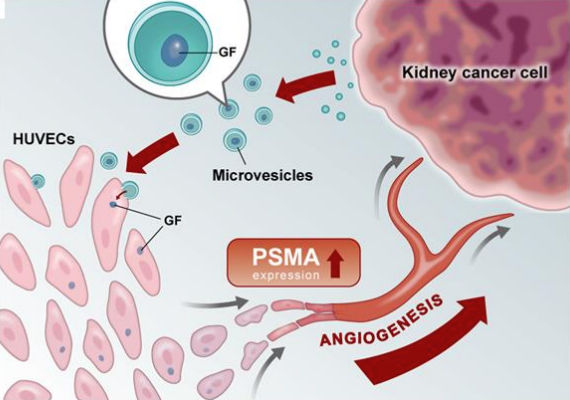
Watanabe et al. Cells 2025
PSMA Is More Than Just a “Marker”
PSMA is widely recognized as a diagnostic and therapeutic target in prostate cancer, but its biological role extends far beyond its function as a cell-surface marker.
As an enzymatically active transmembrane protein, PSMA is involved in glutamate and folate metabolism and has been linked to multiple molecular processes associated with cancer progression, including PI3K–AKT–mTOR signaling, cell adhesion, and angiogenesis.
PSMA is also expressed in the tumor-associated endothelium of multiple cancer types, including renal cell carcinoma, lung cancer, thyroid cancer, and glioblastoma, in addition to prostate cancer.
Furthermore, PSMA undergoes internalization and recycling between the cell surface and intracellular compartments. These properties are particularly important for the development of PSMA-based imaging agents, drug delivery systems, and targeted therapies.
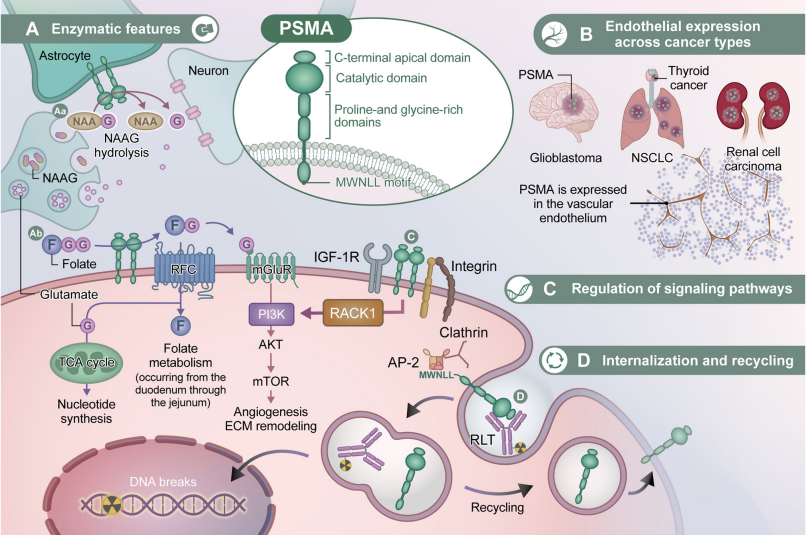
Watanabe et al. Mol. Med. Rep 2026
Related Publications
Prostate-specific membrane antigen: Molecular functions and emerging roles as a therapeutic target (Review)
Watanabe R, Sakaue T, Miura N, Kikugawa T, Saika T.
Mol Med Rep. 2026;33(4):122.
PMID: 41789574
Vesicles Secreted by Renal Cell Carcinoma Cells Cause Vascular Endothelial Cells to Express PSMA and Drive Tumor Progression
Watanabe R, Kagimoto K, Chosei M, Sakaue T, Kurata M, Miura N, Kitazawa R, Kikugawa T, Higashiyama S, Saika T.
Cells. 2025;14(3):165.
PMID: 39936957
PSMA-positive membranes secreted from prostate cancer cells have potency to transform vascular endothelial cells into an angiogenic state
Watanabe R, Maekawa M, Kiyoi T, Kurata M, Miura N, Kikugawa T, Higashiyama S, Saika T.
Prostate. 2021;81(16):1390-1401.
PMID: 34516672