Molecular Mechanisms of Prostate Cancer and DNA Repair
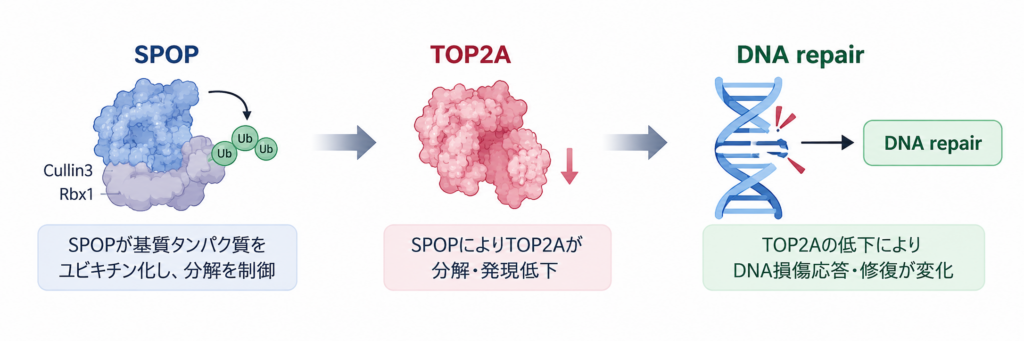
SPOP (Speckle-type POZ protein) is a component of a ubiquitin ligase complex that regulates protein degradation and is one of the most frequently mutated genes in prostate cancer.
We investigate how SPOP contributes to DNA repair and the maintenance of genomic stability in prostate cancer cells. In particular, we have focused on the relationship between SPOP and topoisomerase II alpha (TOP2A) and the DNA damage associated with TOP2A activity.
Loss of SPOP Function Leads to Accumulation of DNA Damage
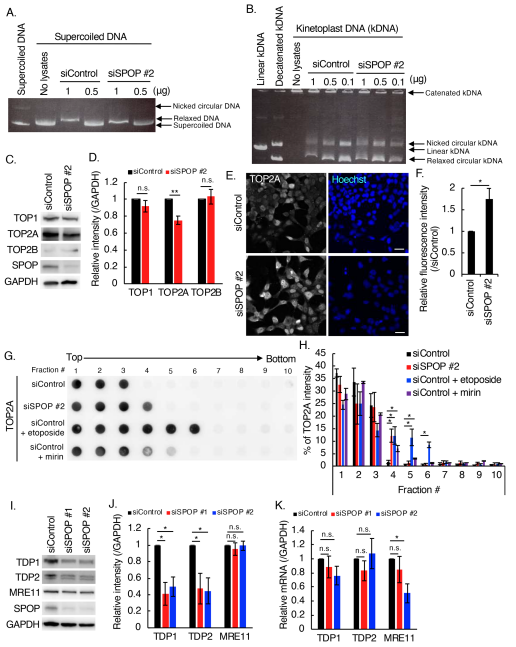
In AR-positive prostate cancer cells, suppression of SPOP resulted in increased levels of γH2AX, a marker of DNA damage.
We further demonstrated that loss of SPOP function impairs the removal of DNA-bound TOP2A, leading to the accumulation of TOP2A–DNA cleavage complexes.
Mechanism for Removing TOP2A from DNA
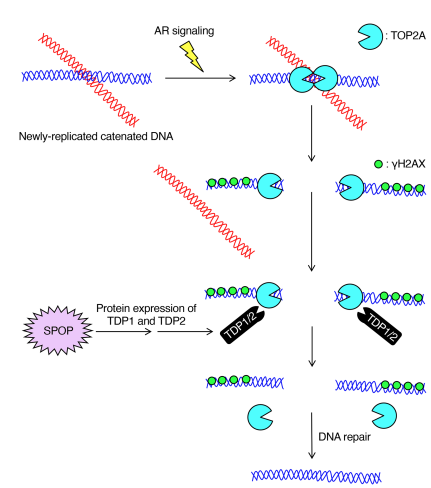
TOP2A is an essential enzyme that resolves topological constraints arising during DNA replication, but it transiently forms covalent complexes with DNA during this process.
Our studies indicate that SPOP facilitates the removal of DNA-bound TOP2A through DNA repair-associated proteins, including TDP1 and TDP2.
When SPOP function is impaired, TOP2A accumulates on DNA, potentially leading to DNA double-strand breaks and genomic instability.
Cancer-Associated SPOP Mutations Alter DNA Repair
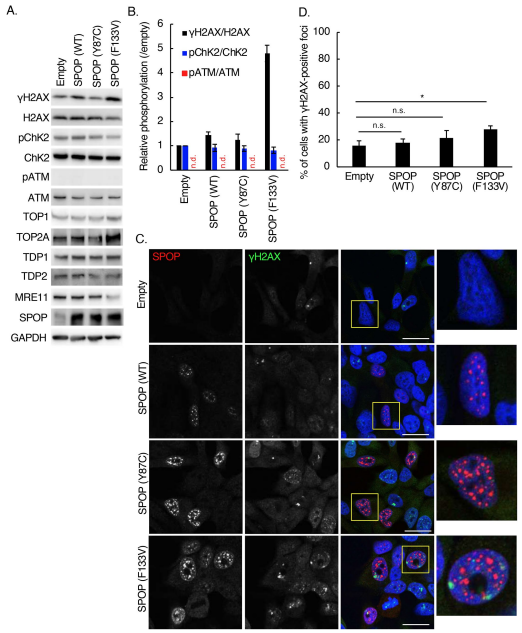
Expression of the prostate cancer-associated SPOP F133V mutation resulted in nuclear accumulation of TOP2A and increased γH2AX.
The F133V mutation was also associated with reduced expression of TDP2 and MRE11, suggesting that disruption of DNA repair mechanisms by SPOP mutations may contribute to genomic instability and prostate cancer progression.
From Molecular Mechanisms to Novel Therapeutic Strategies
Abnormalities in DNA repair mechanisms are involved not only in the development and progression of prostate cancer but also in treatment response.
By further elucidating the interplay among SPOP, TOP2A, AR signaling, and DNA repair, we aim to develop novel therapeutic strategies tailored to the molecular characteristics of prostate cancer.
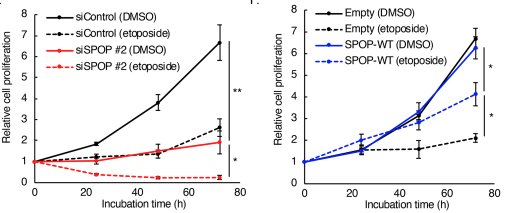
Watanabe et al. Mol. Bio. of the Cell 2020
Related Publications
SPOP is essential for DNA-protein cross-link repair in prostate cancer cells: SPOP-dependent removal of topoisomerase 2A from the topoisomerase 2A-DNA cleavage complex
Watanabe R, Maekawa M, Hieda M, Taguchi T, Miura N, Kikugawa T, Saika T, Higashiyama S.
Mol Biol Cell. 2020 Mar 15;31(6):478-490.
PMID: 31967940